
BREAST IMPLANT
What Type of Implants Are Best for Breast Enlargement Surgery in Dubai?
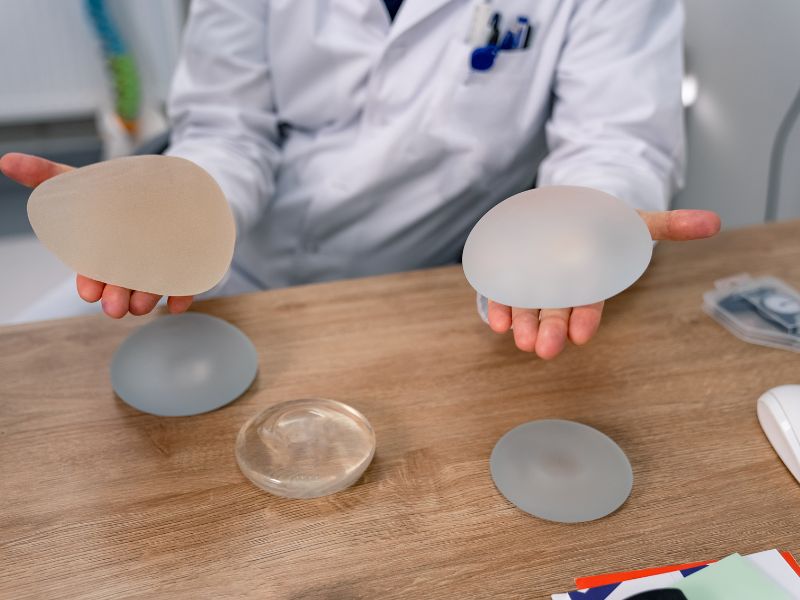
Clear goals, realistic expectations, and a thorough understanding of available options should guide the decision to undergo breast enlargement surgery.
Breast implants are not a “one-size-fits-all” choice. In fact, the US FDA has strengthened breast implant safety requirements to enhance the explanation of risks, including the addition of a boxed warning and a patient decision checklist, so that patients can make a properly informed choice.
If you are seeking breast enlargement surgery in Dubai, this guide will help you understand the main implant options, shape and surface choices, the safety conversations that should occur before surgery, and how implant selection can be done with a specialist in a patient-specific manner.
Understanding breast implants and choosing the right type
Breast implants are medical devices placed beneath the breast tissue or chest muscle to increase breast size, improve shape, or restore volume. They are commonly used in breast enlargement, reconstruction, and revision surgeries, with different types designed to suit individual anatomy and goals.
Modern implant selection should begin with risk communication and long-term planning, rather than just selecting the implant that looks best.
The FDA’s updated requirements and labeling guidance were designed to improve patient understanding, including:
- a boxed warning and more explicit patient-facing labeling
- a manufacturer’s checklist used during consent
- guidance on rupture screening information and device cards
The safest type of breast implant is an FDA-approved implant placed by an experienced surgeon with clear counselling on risks, follow-up, and monitoring.
It is also essential to know that the FDA has issued safety communications on rare cancers reported in the capsule (scar tissue) around breast implants, including squamous cell carcinoma (SCC) and various lymphomas.
This does not mean most patients will face these problems. It means your consultation should cover how risks are monitored, what symptoms should never be ignored, and what follow-up looks like for your implant type.
Different type of breast implants
The best type of breast implants is determined by anatomy, desired breast shape, and long-term safety considerations discussed during consultation.
The main implant types used in breast augmentation are
1. Saline implants
Saline implants have an outer shell made up of silicone filled with sterile salt water. If they rupture, the implant typically collapses, and the body absorbs the saline.
Saline implants are preferred as
- Smaller incision potential because they can be filled after placement
- Precise rupture detection is often possible in many cases because deflation is usually noticeable
Where saline implants may be less ideal
- More chance of visible rippling in thinner tissue coverage in some patients
2. Silicone gel implants
Silicone implants are essentially filled with a silicone gel that mimics the feel of natural breast tissue. If a silicone implant ruptures, it may not collapse, which is why routine monitoring may be advised.
The type of silicone used in breast implants ranges from soft cohesive gel to highly cohesive silicone that maintains form even if the shell is compromised.
Why prefer silicone implants
- Often closer to a natural feel
- Good options for shape, profile, and softness based on the brand and model
Important note on follow-up
- Your surgeon may recommend periodic imaging checks depending on your implant and your individual risk profile.
3. Form-stable (highly cohesive) silicone, often called “gummy bear” implants
These are firmer, thicker silicone gel implants designed to hold their shape even if the shell breaks. They may require a longer incision than some other options.
When they can be a strong choice
- When you want more shape stability
- When you need a specific contour or upper-lower pole balance
Cons to keep in mind
- Firmer feel compared to softer silicone in some cases
- Rotation matters more if the implant is anatomical (teardrop-shaped)
The type of implants breast surgery uses today most often includes silicone gel implants due to their natural feel and predictable outcomes.
4. Structured saline implants
Structured implants are saline-filled and include an internal structure designed to enhance feel and shape compared to standard saline implants.
These can suit patients who want saline’s “rupture visibility” advantage but prefer a more natural feel than classic saline.
Type of breast implants shapes
Type of breast implants shapes include round implants for fuller upper volume and anatomical implants for a more gradual contour.
- Round implants
Round implants tend to give more upper-pole fullness. They are also less affected by rotation because the shape is uniform.
Chosen for
- More visible cleavage and upper fullness
- Patients who want a fuller look in fitted clothing
Anatomical (teardrop-shaped) implants
Anatomical implants are designed for a more sloped contour, with more fullness at the bottom. If they rotate, the breast can look uneven and may need correction.
Often chosen for
- A subtler contour on specific body frames
- Patients prioritising a gentle slope rather than upper fullness
Implants as per the surface
- Smooth implants
Smooth implants move more freely within the pocket and can look natural with movement.
- Textured implants
Textured implants were designed to reduce movement by encouraging tissue adherence. Breast implant-associated anaplastic large cell lymphoma (BIA-ALCL) is rare but has been reported more frequently in patients with textured implants.
Your implant surface choice should be discussed with clear reasoning, including whether a smooth implant can achieve your goals safely and effectively.
Breast Implant Options at a Glance
| Feature | Saline Implants | Silicone Gel Implants | Form-Stable (Gummy Bear) Implants | Fat Transfer (No Implant) |
| Filling / Material | Sterile salt water | Soft cohesive silicone gel | Highly cohesive silicone gel | Your own body fat |
| Feel | Firmer, less natural in some cases | Closest to natural breast tissue | Firmer, holds shape well | Natural |
| Shape Options | Round | Mostly round | Anatomical (teardrop) | Depends on fat placement |
| Surface Type | Smooth | Smooth | Smooth or textured | Not applicable |
| Incision Size | Smaller (filled after placement) | Moderate | Slightly longer | Small liposuction incisions |
| Rupture Detection | Usually obvious due to deflation | May be silent | Maintains shape if the shell is damaged | Fat absorption varies |
| Volume Increase | Moderate to large | Moderate to large | Moderate | Small to moderate |
| Best Suited For | Patients prioritising rupture visibility | Patients seeking a natural look and feel | Patients needing a defined shape or reconstruction | Patients wanting subtle enhancement |
| Key Consideration | Possible rippling in thin tissue | Requires long-term monitoring | Rotation matters with shaped implants | Results depend on fat survival |
Safest type of breast implants
The best implant is the one that matches your anatomy, lifestyle, and risk comfort, and can be placed safely with a plan for long-term monitoring.
The newest type of breast implants is designed to retain shape while minimising the risk of gel migration or distortion over time.
During consultation, a surgeon typically maps decisions across five practical areas:
1) Your tissue and proportions
- How much natural breast tissue do you have
- Your chest width and breast base width
- Skin quality and laxity
2) Your goal, described in absolute terms
- Natural slope vs upper fullness
- Subtle size increase vs noticeable volume change
- Symmetry correction if one side is smaller
3) The “feel” you want
- Softer silicone options vs firmer form-stable options
- Whether the saline rippling risk is relevant for your tissue thickness
4) Your tolerance for trade-offs
- Visibility of rupture (often clearer with saline) vs less obvious rupture risk (silicone may not collapse)
- Scar planning, including whether a longer incision is needed for certain implants
5) Long-term follow-up planning
This includes understanding rare but essential safety updates, such as FDA communications regarding cancers reported in the capsule around implants, and what symptoms should prompt urgent review.
The role of fat transfer
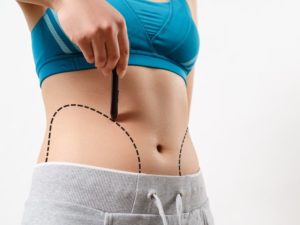
Fat transfer breast augmentation utilises liposuction to remove fat from areas such as the abdomen or thighs and inject it into the breasts for a more minor volume increase.
This can be suitable if you want a modest enhancement and prefer using your own tissue, or if you wish to undergo minor contour refinement alongside implants.
Why do patients choose Dr Faisal Salim for breast augmentation
Dr Faisal Salim’s approach is built around personalised planning and a condition-led assessment, rather than a templated implant choice.
Key strengths which the patients value include:
- Bespoke treatment planning: Each patient is assessed individually, and the plan is tailored to anatomy, goals, and comfort with risk.
- Strong surgical training background: Dr Salim is trained in leading UK centres and completed advanced aesthetic fellowship training, building experience across complex breast surgery and aesthetic procedures.
- Whole-journey care: From consultation and decision-making through recovery planning and follow-up, the process is designed to be structured and thorough.
- Recognised presence and credibility: His work and clinic are positioned at a premium level, with an emphasis on safety, comfort, and refined outcomes.
Making the right implant choice starts with the right surgeon
Implant trends do not define breast enlargement surgery, but by informed decisions made with clinical insight and long-term care in mind. The ideal implant complements your anatomy, aligns with your expectations, and is chosen with a clear understanding of safety and follow-up considerations.
With a bespoke, consultation-led approach, Dr Faisal Salim focuses on careful assessment, transparent discussion, and tailored implant selection to achieve refined, natural outcomes. If you are considering breast enlargement surgery in Dubai, a personalised consultation with Dr Faisal Salim is the most critical first step toward results that feel confident, balanced, and lasting.
FAQs
The best implant depends on your anatomy, aesthetic goals, and safety preferences. Silicone implants are commonly chosen for their natural feel, while saline or form-stable implants may be more suitable for specific needs after a clinical assessment.
Both silicone and saline implants are FDA-approved and considered safe when placed by a qualified surgeon. The choice depends on factors such as feel, incision planning, and how rupture is monitored over time.
Gummy bear implants are form-stable silicone implants that retain their shape and form. They may be suitable for patients seeking defined contouring, though they are firmer and require careful placement.
Textured implants have been associated with a rare condition called Breast Implant Associated Anaplastic Large Cell Lymphoma (BIA-ALCL). Because of this, implant surface type should always be discussed carefully during consultation, weighing benefits against known risks.
Implant selection is based on your body proportions, existing breast tissue, skin quality, lifestyle, and long-term safety considerations. A personalised consultation is essential to make the right decision.
The primary options include saline implants, silicone gel implants, and form-stable silicone implants, each offering a different feel, shape, and long-term characteristics.
The best implants for breast enlargement in Dubai are those chosen after a personalised assessment of your body proportions, tissue quality, aesthetic goals, and long-term safety, rather than a single implant type that suits everyone.
An implant-displacement mammogram performed at an accredited imaging centre, allows clearer visualisation of breast tissue around the implant.


Patient Testimonials


- Home
- Meet Dr. Faisal Salim
- Surgical Procedures
- Non-Surgical Treatments
- The Patient Journey
- Conditions
- Face
- Tired Eyes
- Facial Ageing
- Facial Volume Loss
- Wide / Square Jaw
- Gummy Smile
- Chin Augmentation
- Jawline Rejuvenation
- Jowls
- Teeth Grinding
- Eye Bags
- Drooping Eyelids
- Drooping Brow
- Double Chin
- Nasolabial Folds
- Premature Ageing
- Wrinkles
- Crows Feet
- Frown Lines
- Forehead Lines
- Drooping Mouth / Marionette Lines
- Thin Lips
- Gaunt Cheeks
- Prominent Ears
- Neck Sagging
- Turkey Neck
- Breast
- Body
- Face
- Patient Journey
- News & Resources
- Contact us